
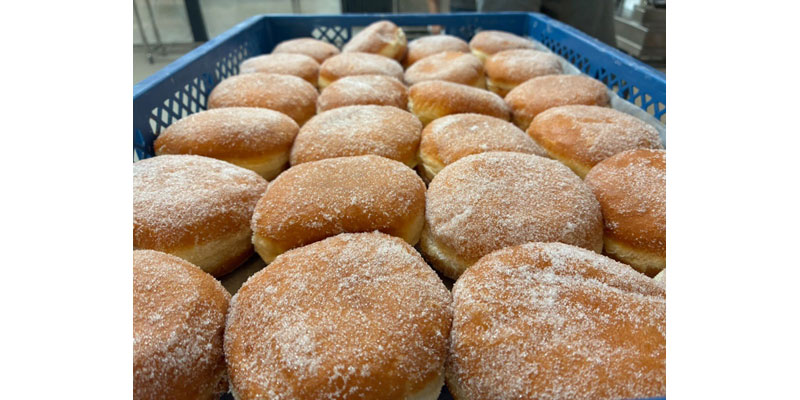
From small-batch artisan production to a fully automated line, every successful doughnut process starts with the product, required throughput and future production needs.
Producing doughnuts consistently at scale requires control of mixing, forming, proving, frying and finishing. The right equipment depends on the product, throughput, available space, labour, cleaning requirements and future plans.
Determine the product and capacity
The first decision is the type of product: Will it be yeasted or batter doughnuts? Or both?
Yeasted products include balls, rings, mini bites and yum yums use a proved enriched yeasted dough.
While batter or non-yeasted / cake style doughnut products, including churros and cruller, use a liquid mix (with baking powder as the leavening agent) that is deposited directly into the fryer.
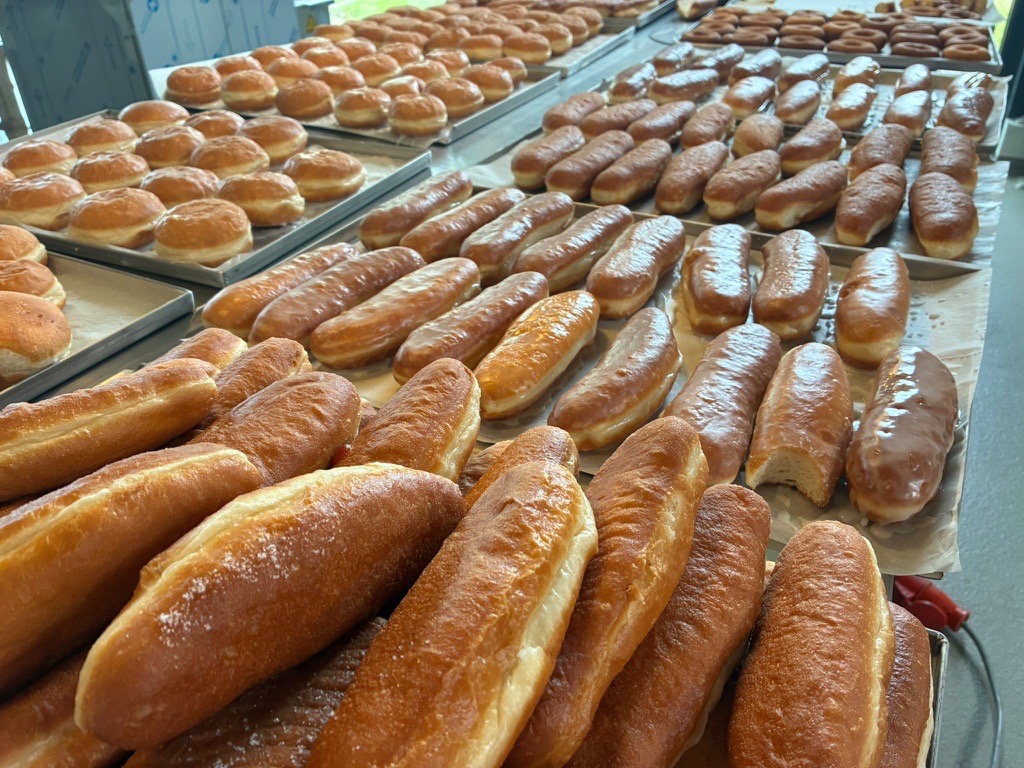
The finished format also determines the equipment required; for example, rings may need flattening and stamping before proving, filled doughnuts need injection.
Capacity should be considered alongside production frequency, for example, occasional batches may be better supported by flexible stand-alone equipment, while long production runs can justify an integrated line. Production falls into three categories:
- Small batch: stand-alone mixing, dividing, proving and frying equipment
- Semi-automated: machine forming and controlled transfer into a continuous fryer
- Fully automated: an integrated process from dough feeding to frying and finishing
Explore EPP’s roll and doughnut plants for options spanning small-batch, semi-automated and fully integrated production.
Mix, divide and form
For yeasted doughnuts, the mixing of the ingredients also requires the development of the gluten network that provides the dough elasticity and aids retention of the carbon dioxide created during proving. Under-mixed, overworked or dough left waiting to be processed after mixing will affect every stage that follows. Batch size should therefore match line throughput, so the dough is processed while its condition is optimal.
Discover EPP’s industrial mixing solutions, including spiral and automated systems, dough-temperature control, bowl tips and feed systems.
The dough is then divided into accurate pieces and rounded. Small producers may use a press or BDM style divider or a smaller automated divider and rounder like a Koenig Mini Rex, while larger plants use multi-lane systems capable of producing thousands of pieces per hour. See EPP dough dividing equipment for artisan to industrial production.
Ball doughnuts continue in their rounded form. Rings generally receive a short pre-proof so the dough can relax before it is flattened and the hole stamped out. Flexible lines can move or bypass the stamping section, allowing the same line to handle different formats.
Mixing the batter for non-yeasted doughs requires a different approach to mixing as overworking the mix will not achieve the light fluffy texture desired.
Prove for the right texture
Proving develops the volume and aerated texture of a yeasted doughnut. Time, temperature and humidity must be carefully controlled to prevent the surface drying and restricting expansion. Before frying, a cooler, drier stage can form a skin that helps control oil absorption during frying. Depending on the production scale, proving may take place on trays in rack provers or within an automated swing prover.
Non yeasted doughnuts are produced by the batter being deposited directly into the fryer. The size and weight of the product is determined by the depositor settings. The height of the drop and controlling the drop into the hot oil are critical in achieving the ideal product. A drop plate sits under the oil to prevent the batter dropping too deeply from the depositor on entry into the oil.
Control the frying process
Frying is a short but critical stage, as time, oil temperature and product entry influence colour, structure and oil uptake. Maintenance of the oil is crucial to achieving good quality frying, keeping it clean by filtering the oil continuously, ensuring it is not overheated at any point within the fryer and that the level in the fryer is maintained without impacting the temperature of the oil.
Smaller batch fryers may be operator controlled, so consistency of frying time and turnover of product is critical to ensure consist product quality.
In a continuous fryer, the product is fed in, normally over a drop plate to prevent the raw product from dropping too deeply into the oil. Next indexing bars move the product gently down the fryer, controlling spacing and automated turning stations flip the floating doughnuts so it fries evenly. Frying time depends on the type and size of the doughnut being produced.
Consistent colour is a useful process indicator, but the centre must also be fully cooked and the dough structure set. EPP supplies doughnut frying and finishing systems ranging from tabletop fryers and traditional vats to automated continuous solutions with temperature control and turning mechanisms.
Fill, finish and packaging
The creative part of the process is taking the fried doughnut and providing the finish.
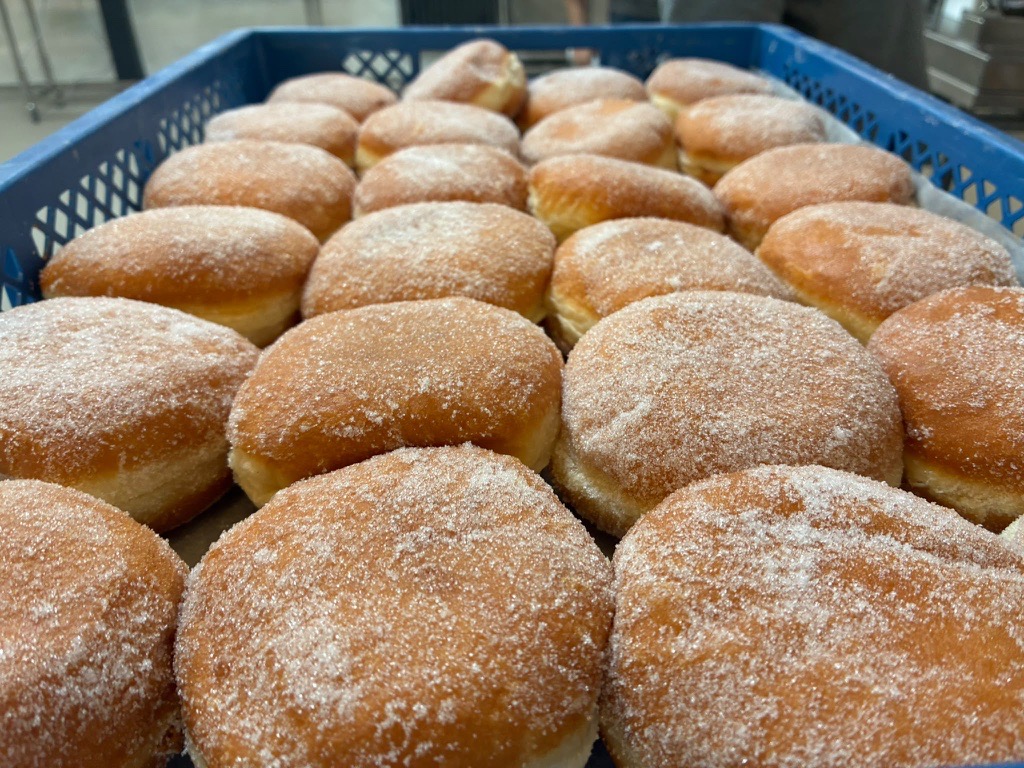
Finishing options include sugar coating, spraying, dipping, glazing and enrobing (with excess coatings or decorations collected and recirculated where appropriate). See EPP’s depositing, injecting and decorating lines. At the higher quality end, hand finishing with dramatic toppings can really make a doughnut become spectacular.
Fillings such as jam or creams can also be added. Ball doughnuts are generally injected from the side, while ring products can be filled from above using multiple needles. Accurate depositors control portion size and can accommodate different fillings, while interchangeable hoppers and needle sets help reduce changeover time.
Cooling and packaging
Cooling and packaging must balance freshness with surface quality. Left exposed, a doughnut can dry and harden, enclosed too soon, moisture may make a sugar coating sticky. A set glaze can provide a partial moisture barrier, but conditions still need to suit the recipe, finish and intended shelf life. Packaging can connect directly to the line where sufficient cooling and accumulation are allowed between stages. EPP’s industrial bakery equipment portfolio includes cooling, flow wrapping, bagging and packing solutions.
Cleaning, safety and operator training
Dough, fillings, sugar and frying oil create different cleaning demands. Accessible, washable equipment and a routine covering between-batch, end-of-shift and deeper cleans will help protect product quality and equipment life.
Overheating the oil impacts product quality and flavour, and critically if it is not controlled is a significant fire risk. Frying oil also requires good temperature control, suitable extraction, monitoring and fire-suppression measures.
Automation reduces manual handling, but operators still need to understand dough condition, machine settings, proving, fryer control and finishing ingredients. Effective training helps maintain consistent weight, shape, colour, fill level and finish throughout production.
Plan the right line for today and tomorrow
A doughnut line should meet today’s needs without limiting future opportunities. Capacity is often determined by the slowest stage, so every component must be balanced around the same rate. Allowing space for additional proving capacity, a larger fryer or extra finishing modules can make it easier to increase throughput or expand the product range later.
Start with the process, not the machine
The right solution begins with a clear understanding of the product and how it will be made. EPP works with bakeries across the UK and Ireland to consider recipes, volumes, labour, changeovers, available space and future capacity before recommending stand-alone equipment or a complete line. Explore EPP’s bakery equipment or speak to the team about a process built around consistent quality, efficient production and practical growth.