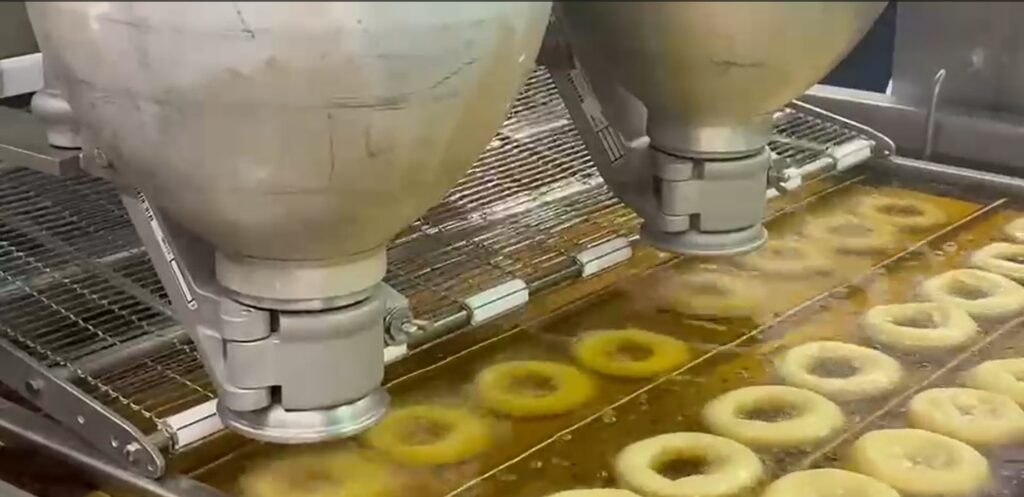
For doughnut manufacturers, looking after the frying oil is critical to product quality and to control production costs. Its condition affects the colour, flavour and texture of the finished doughnut, while having to replace it adds unnecessary expense and interrupts production.
Effective oil management on a continuous frying line combines temperature control, filtration and regular quality checks to extend oil life without compromising performance.
Why oil condition matters
Constant exposure to heat, air, moisture and food particles gradually degrades frying oil, changing its colour, thickness, flavour, and odour.
These changes affect the quality of the finished doughnut, degraded oil may increase oil absorption, leaving a greasier product.
If oil thickens, circulation and heat transfer can become less effective, making temperature control more difficult. Monitoring its condition should therefore be part of the production routine.
Food safety is another important consideration, oil monitoring, cleaning and replacement procedures should all form part of the manufacturer’s wider food-safety management system, with documented checks, clear limits and corrective action when those limits are reached.
Five practical steps to better oil management
- Keep frying temperatures under control
Use the lowest operating temperature that consistently delivers the required product quality and throughput, within the oil’s specification and the fryer manufacturer’s operating instructions.
Avoid unnecessary overheating during start-up, shutdown and production interruptions. Even relatively small increases in temperature can accelerate oil deterioration, making consistent control important throughout the production cycle.
- Remove crumbs and debris
Loose dough and other residues continue to cook in the oil, contributing to discolouration, unwanted flavours and faster deterioration.
Effective continuous filtration helps remove these particles, supported by regular cleaning in accordance with the equipment manufacturer’s procedures. The filtration system should be suitable for both the frying oil and the fryer design.
- Monitor oil-quality and make checks part of the routine
Colour, odour, foaming and thickness can indicate changes in oil condition, do not rely on appearance alone.
Clear limits should be established in line with applicable food-safety requirements.
- Avoid unnecessary heating and exposure to air during stoppages
Leaving oil hot when production has stopped exposes it to continued deterioration without contributing to production.
Follow the fryer manufacturer’s approved procedures for reducing the temperature or shutting down during interruptions. Keeping the oil system clean and limiting unnecessary exposure to air also supports good oil management, while safe operating conditions must remain the priority.
- Manage topping up and replacement
Use a consistent, food-grade frying oil suited to the product and operating temperature. Fresh oil should be added as required to maintain the correct operating volume.
However, topping up is not a substitute for replacement. Adding fresh oil will not return badly degraded oil to its original condition, so replacement decisions should remain linked to quality checks and established limits.
Consistency is the measure of success
Good oil management delivers reliable frying performance and finished doughnut quality.
By combining controlled temperatures, effective filtration and routine monitoring, manufacturers can make better-informed decisions about replenishment and replacement. This helps maintain product consistency, reduce avoidable waste and controls production costs.
For further information about EPP’s wide range of bakery and food-processing technologies, visit www.eppltd.co.uk.