
Compressed air may appear to be a quick and convenient way to clear flour dust from bakery equipment, conveyors and production areas. However, in a modern bakery environment, it can create more problems than it solves.
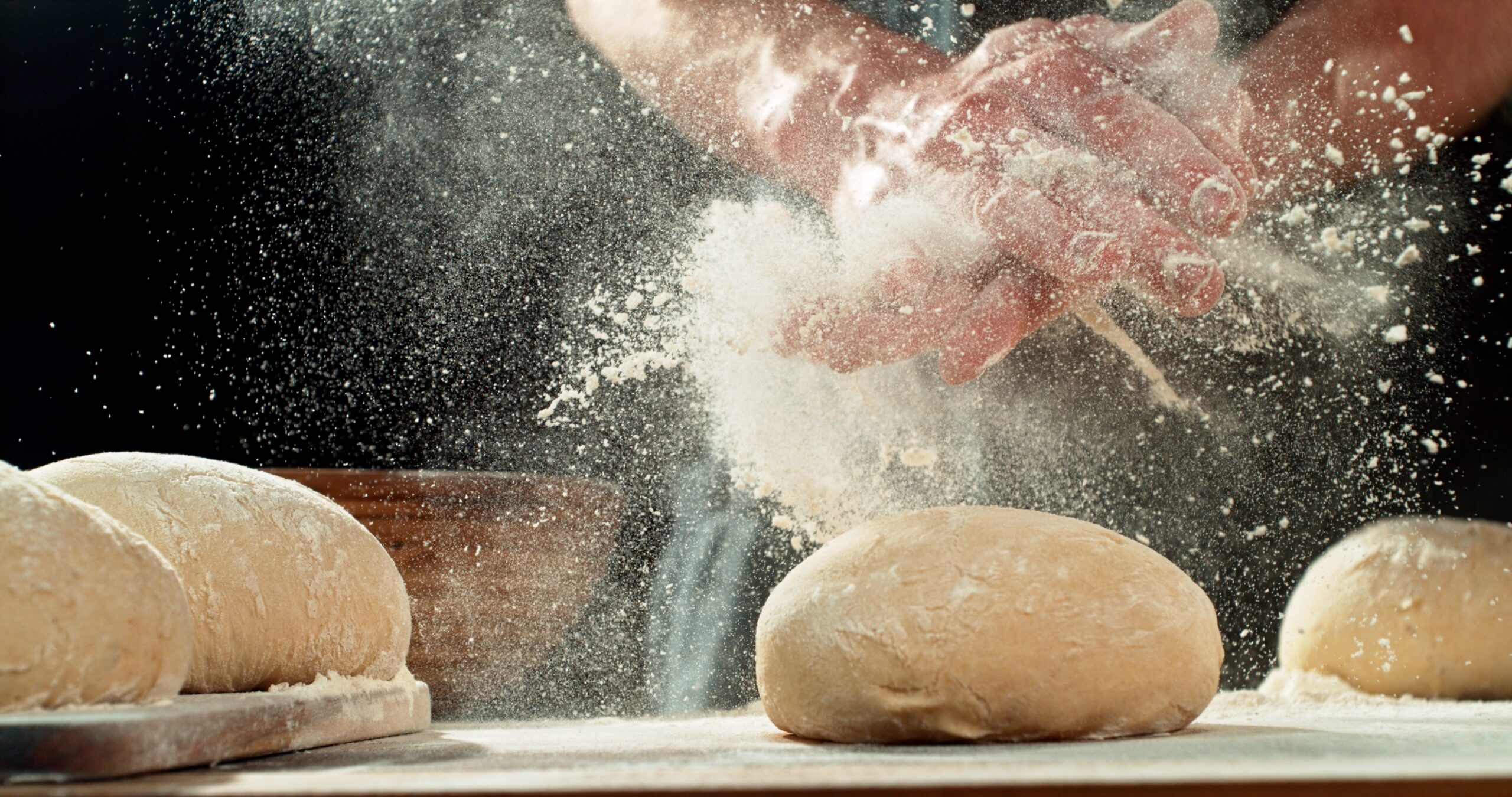
Rather than removing contamination, compressed air simply redistributes it. Flour dust, allergen residues and other fine particles can be blown into the air, onto surrounding equipment, into hard-to-reach areas and, in some cases, into sensitive mechanical or electrical components. For bakeries focused on hygiene, compliance and reliable production, this presents a clear operational risk. The Health and Safety at Work Act 1974[1] places a general duty on employers to ensure, so far as is reasonably practicable, the health and safety of employees.
Flour dust is a recognised occupational health hazard, the Health and Safety Executive identifies it as a respiratory sensitiser and one of the main causes of occupational asthma, dermatitis and rhinitis and respiratory irritation in the baking industry[2]. Under the Control of Substances Hazardous to Health regulations (COSHH), employers are expected to control exposure at source and use cleaning methods that minimise airborne dust[3]. HSE guidance[4] states that bakeries should avoid sweeping or using compressed air and should instead use wet cleaning methods or suitable industrial vacuum systems.
In bakeries handling multiple ingredients and allergens, compressed air can not only expose workers but also increases the risk of cross-contamination. Fine residues from flour, milk, egg, sesame, soya, nuts or other allergenic ingredients can become airborne and settle on surfaces that have already been cleaned. This makes contamination pathways harder to see, harder to control and harder to verify during hygiene checks or audits.
There is also a safety consideration, as flour and many other bakery dusts are combustible, for example, when dispersed in air, they can contribute to the formation of explosive atmospheres under certain conditions. For sites operating under the Dangerous Substances and Explosive Atmospheres Regulations (DSEAR)[5] requirements, cleaning practices should minimise dust clouds and prevent unnecessary accumulation or disturbance of combustible dust.
From an engineering perspective, compressed air can also damage equipment over time as fine particles can be forced into bearings, sensors, drives, electrical enclosures and moving components, increasing the risk of wear, overheating, faults and unplanned downtime. What appears to be a fast-cleaning method can lead to longer-term reliability and maintenance issues.
A more effective approach is to design dust control and cleaning into the production process which includes appropriate local exhaust ventilation, enclosed flour handling where possible, hygienic equipment design, controlled dismantling procedures, and industrial vacuum systems with suitable filtration. These methods remove contamination from the production environment rather than spreading it around it.
In modern bakeries, compressed air remains an important utility for powering equipment and supporting production. But as a cleaning method, it has no place in a controlled, compliant food manufacturing environment.
In summary, effective cleaning removes contamination, whereas compressed air does not, it moves it somewhere else.
If your bakery is reviewing cleaning practices or equipment hygiene, EPP can advise on practical solutions that help reduce risk, improve reliability and support compliant production. Please email one of the team at sales@eppltd.co.uk or visit the website www.eppltd.co.uk.
[1] https://www.legislation.gov.uk/ukpga/1974/37/section/2
[2] https://www.hse.gov.uk/food/occupational-health/asthma.htm
[3] https://www.hse.gov.uk/coshh/industry/baking.htm